
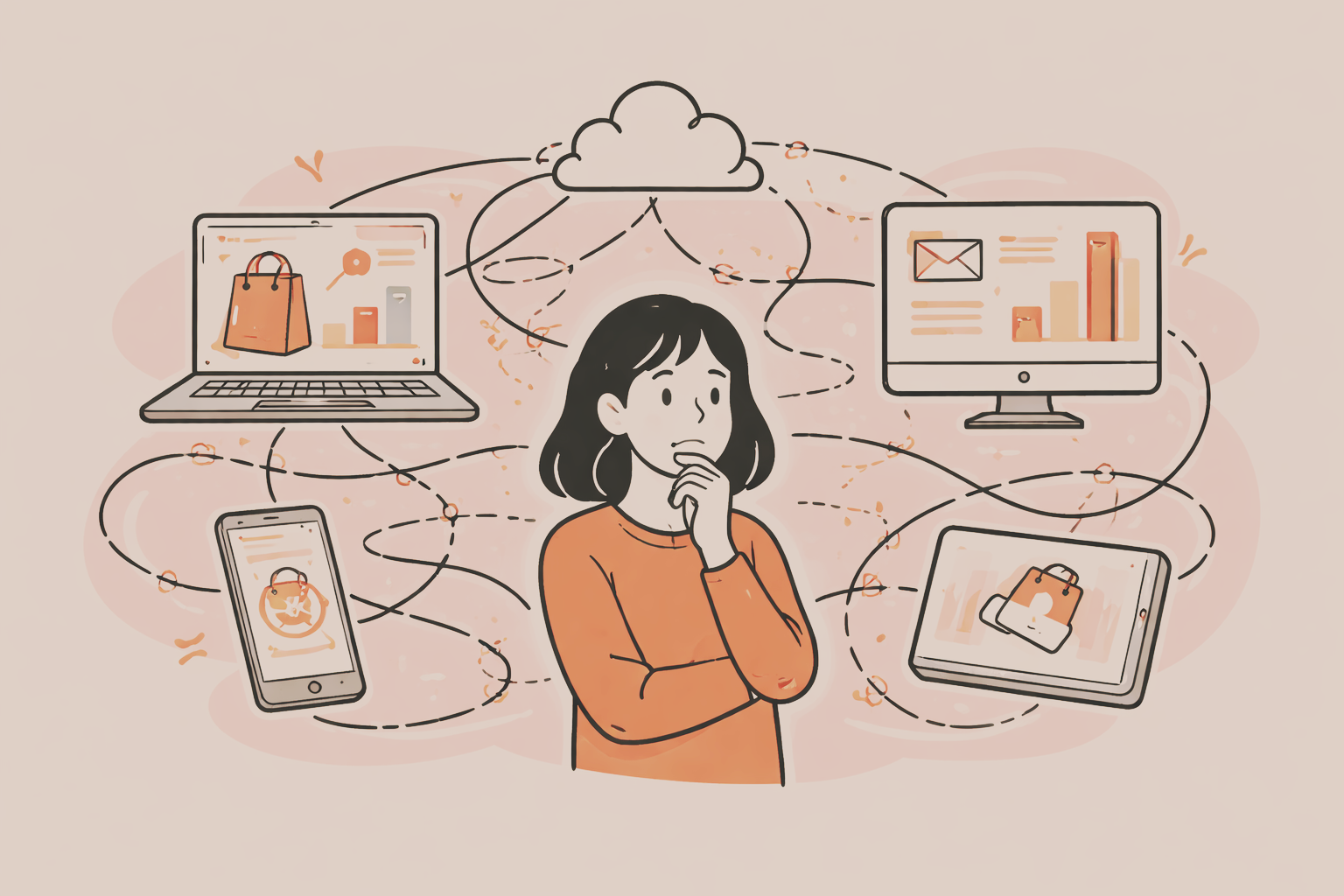
Personalization in CPG marketing has evolved dramatically over the past decade. What had once relied on brand demographic targeting (age, income, household size, etc.) has shifted towards behavior. As digital channels multiplied and consumer expectations rose, brands needed a way to make sense of growing volumes of data and translate it into relevance. AI entered the picture and suddenly gave brands the tool they needed to meet the new need at scale. At Julee Ho Media, we’ve watched the rapid acceleration of AI adoption and wanted to take a deeper look at how marketing leaders can better leverage AI-driven personalization. In this piece, we explore:
What AI-driven personalization actually means in a CPG context
Where personalization is delivering real value today across retail media, ecommerce, and owned channels
The most common pitfalls marketing leaders encounter, from data limitations to over-personalization
What AI can (and can’t) replace when it comes to brand strategy and creative judgment
A practical framework for leadership teams considering how to adopt AI personalization
What the next phase of AI-driven personalization means for scale, structure, and cross-team alignment
For mid- to large-size CPG brands, AI-driven personalization is becoming unavoidable. Retail media networks are platforms owned by retailers that allow brands to purchase ad space across the retailer’s digital and physical channels (e.g. Amazon Ads, Walmart Connect, and Target’s Roundel), and they now rival traditional media in spend and influence. Ecommerce and DTC channels generate continuous behavioral signals. Consumers expect relevance across touchpoints, whether they’re scrolling Amazon, opening an email, or browsing a brand site. AI offers a way to process complexity, but only if it’s grounded in good strategy.
It’s worth setting expectations early: AI is not a replacement for brand strategy, creative judgement, or leadership decision-making. It’s a tool that can amplify what’s already working or accelerate what’s already broken. This matters most for marketing leaders tasked with driving growth while balancing scale, efficiency, and ROI in an increasingly fragmented landscape.
What “AI-Driven Personalization” Actually Means in CPG
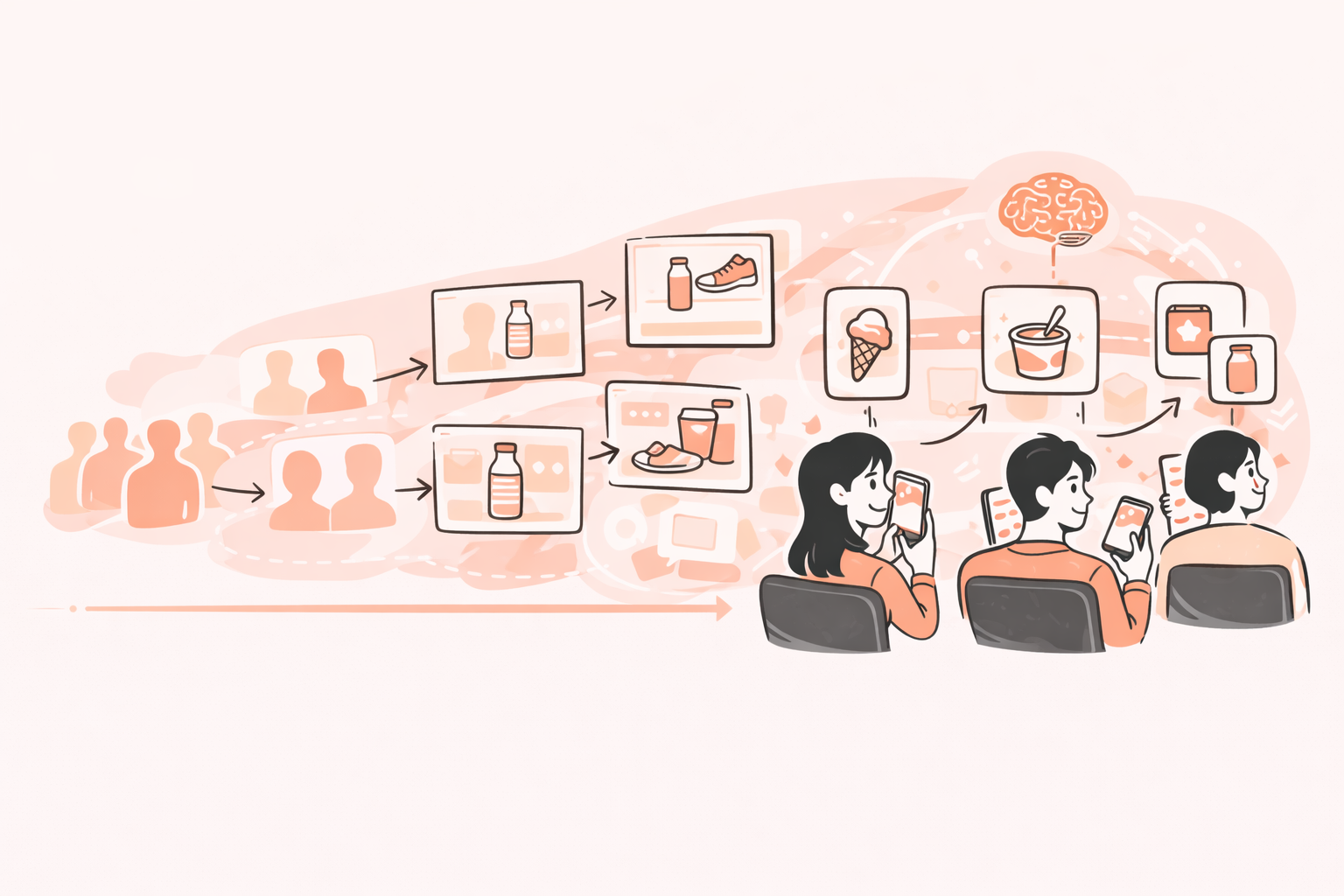
At its core, AI-driven personalization is about using data patterns to deliver more relevant experiences to consumers without requiring humans to manually define every rule. In practical terms, it means systems that can learn from consumer behavior and adjust messaging, product recommendations, or timing accordingly.
For example, instead of a brand pre-deciding that all first-time buyers receive the same welcome email, an AI-driven system can recognize whether a shopper browsed recipes, spent more time on a specific product category, or reordered within a short window. The system can adapt what content or products are surfaced next to better align with customer desires.
In CPG, this often looks less like one-to-one personalization and more like smart segmentation at scale. AI helps brands decide which message to show to whom, where, and when, across retail platforms, owned channels, and media environments.
For example, consider a snack brand selling across both Amazon and its own website. Instead of defining static customer segments upfront, an AI system can observe patterns over time, such as which shoppers respond to variety packs versus single flavors, or which audiences convert after a recipe-driven message versus a functional benefit. The output isn’t a hyper-customized experience for every individual, but smarter prioritization: which products to surface, which messages to lead with, and which channel is most likely to convert at that moment.
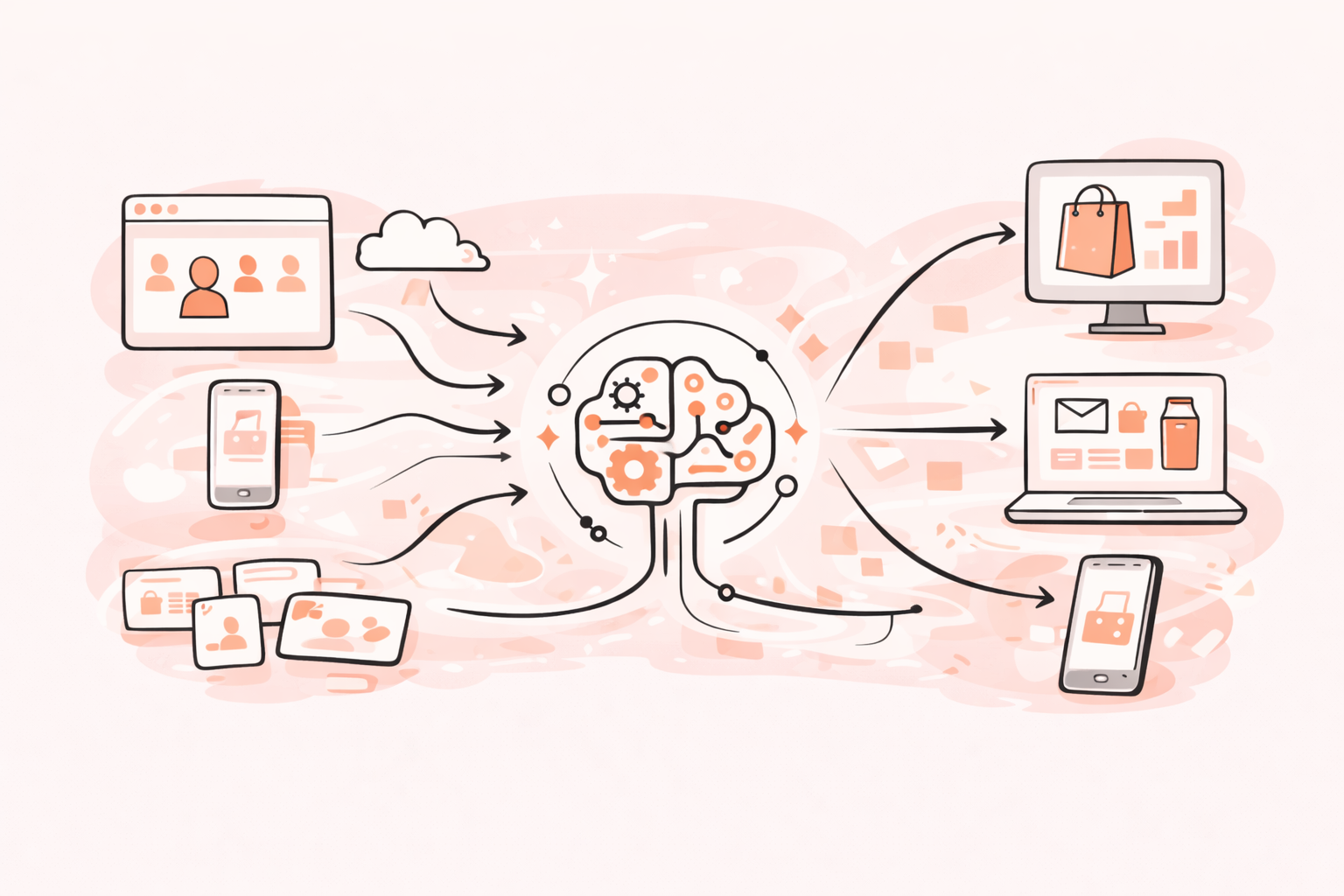
Key inputs AI typically uses in CPG include:
First-party data: DTC purchases, email engagement, website behavior, loyalty activity
Retail and shopper data: Signals controlled by retailers and retail media networks
Behavioral and transactional signals: Browsing patterns, repeat purchases, reorder timing, promotion responsiveness
Common outputs include:
Personalized or dynamic adjusted messaging
Product recommendations based on likelihood to purchase
Channel and timing optimization to reach consumers at moments of high intent to purchase
It’s also important to distinguish between two different approaches:
Rule-based personalization: Human-defined “if this, then that” logic
Machine learning-driven personalization: Systems that identify patterns and adapt over time, often uncovering relationships humans wouldn’t spot
Both have a place. The risk comes when brands assume they’re further along in the maturity curve than they actually are and implement the wrong system.
Where AI Personalization is Working in CPG Today
Retail Media and E-Commerce
Retail media is one of the clearest near-term wins for AI personalization in CPG. These platforms sit closest to purchase intent and offer robust shopper data, making them ideal for smarter targeting and optimization.
In practice, this often shows up as AI-driven product recommendations or creative prioritization within retail platforms. A beverage brand, for instance, may find that shoppers browsing functional drinks late in the day respond better to benefit-led messaging, while weekend shoppers respond to flavor or lifestyle cues. AI helps optimize these patterns at scale, continuously adjusting targeting and creative based on life shopper behavior without requiring constant manual intervention from the marketing team.
AI enables:
More relevant product recommendations within retailer ecosystems
Smarter audience target based on category behavior
Creative variation informed by shopper signals rather than static assumption
From a technology standpoint, most of this work happens inside retailer-owned platforms. Tools like Amazon Retail Media and Amazon Marketing Cloud, Walmart Connect, and Instacart Ads via the Carrot Ads Platform allow brands to activate AI-driven targeting and measurement using retailer-controlled data.
However, this power comes with a constraint: retailers ultimately own both the data and the customer relationship. AI can drive efficiency and relevance here, but brands have limited visibility. For leadership teams, the opportunity is significant, but it should be viewed as one component of a broader personalization strategy.

DTC and Owned Channels
Owned channels offer brands far more control and far more responsibility. AI-driven personalization here can improve relevance across:
Email and SMS messaging
Website content sequencing and product discovery
Cart recovery and order timing.
On owned channels, AI personalization is often most effective when applied to sequencing rather than surface-level customization. A returning customer might see a homepage that leads with replenishment options or subscription reminders, while a first time visitor is guided through brand story, social proof, and best-seller discovery. The goal isn’t to overwhelm the user with choices, but to reduce friction by anticipating intent and presenting information in the most helpful order.
This is where first-party data matters most. Platforms such as Salesforce Marketing Cloud with Einstein AI, Adobe Experience and Adobe Target, and Bloomreach allow brands to unify behavioral data across touchpoints and apply AI-driven decisions in real time. These systems help determine what content to show, when to show it, and in what order to show it based on past purchases, browsing habits, and engagement history.
When used well, AI helps brands deepen relationships and improve lifetime value. When used poorly, it creates extra noise and erodes trust with consumers. For leadership teams, the differentiator isn’t access to technology, it’s having a clear view of which moments matter most to the customer and using AI to support them.

Brand Storytelling at Scale
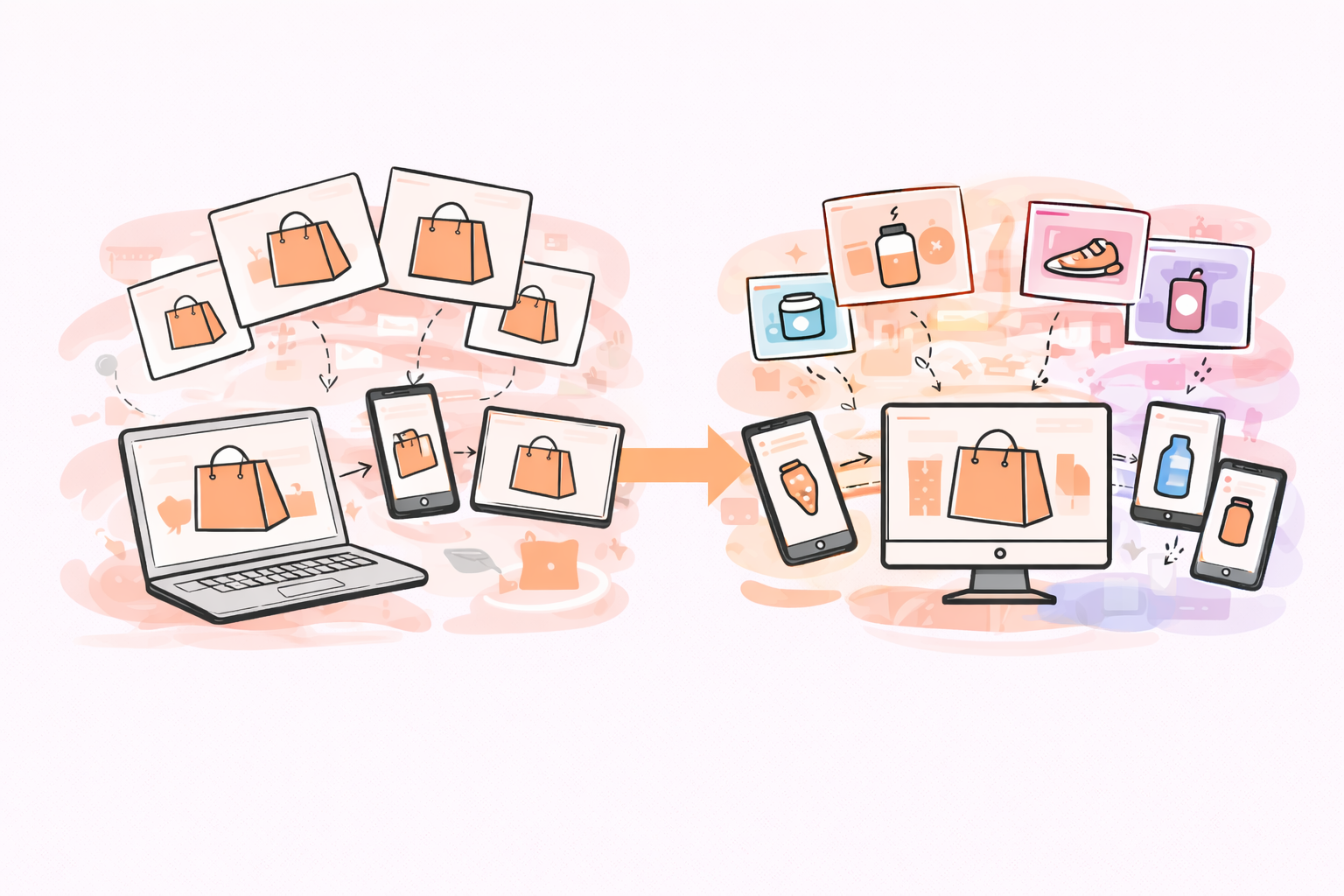
One of the biggest misconceptions about AI personalization is that it fragments brand identity. In reality, the strongest programs use AI to adapt delivery, not dilute story.
Successful brands define clear creative guardrails (e.g. tone, visual language, messaging hierarchy) and allow AI to adjust emphasis, sequencing or format within those boundaries. Relevance improves without sacrificing cohesion.
For example, a premium food brand may maintain a consistent visual system and brand voice, while allowing AI to adjust which product benefits lead the story, such as taste, sourcing, or convenience, based on audience signals. The brand remains recognizable at every touchpoint, but the narrative emphasis flexes to meet different consumer motivations. In this way, personalization enhances relevance without overcompromising identity.
Platforms like Adobe Target, Optimizely, and Smartly.io support this approach by enabling controlled experimentation and dynamic creative delivery. Tools such as Adobe Firefly and Adobe Experience Cloud further reinforce this model by assisting with content production and variation while keeping creative directly in human hands.
The key distinction here for leadership teams is that AI supports creative execution and scale, not creative judgement. Brand strategy and storytelling remain human-led decisions.
Operational Efficiency
Beyond consumer-facing benefits, AI can dramatically improve internal efficiency:
Faster testing and learning cycles
Reduced manual segmentation and campaign setup
Smarter budget allocation across channels
One common use case is testing creative or messaging variations at a pace that would be impractical manually. Rather than launching a handful of predefined tests, AI can help identify early performance signals and shift spend towards higher-performing variations automatically. For leadership teams, this translates to faster learning cycles, and more confident decision-making, without increasing headcount or complexity.
Platforms such as Segment by Twilio, Tealium, and Google Cloud’s Vertex AI help centralize data, automate decision-making, and support experimentation across channels. While these tools vary in sophistication, their shared value lies in reducing friction between insight and action.
For leadership, this is often where the business case becomes most compelling, freeing teams to focus on strategy instead of execution.

The Real Pitfalls Marketing Leaders Need to Watch For
Data Limitations
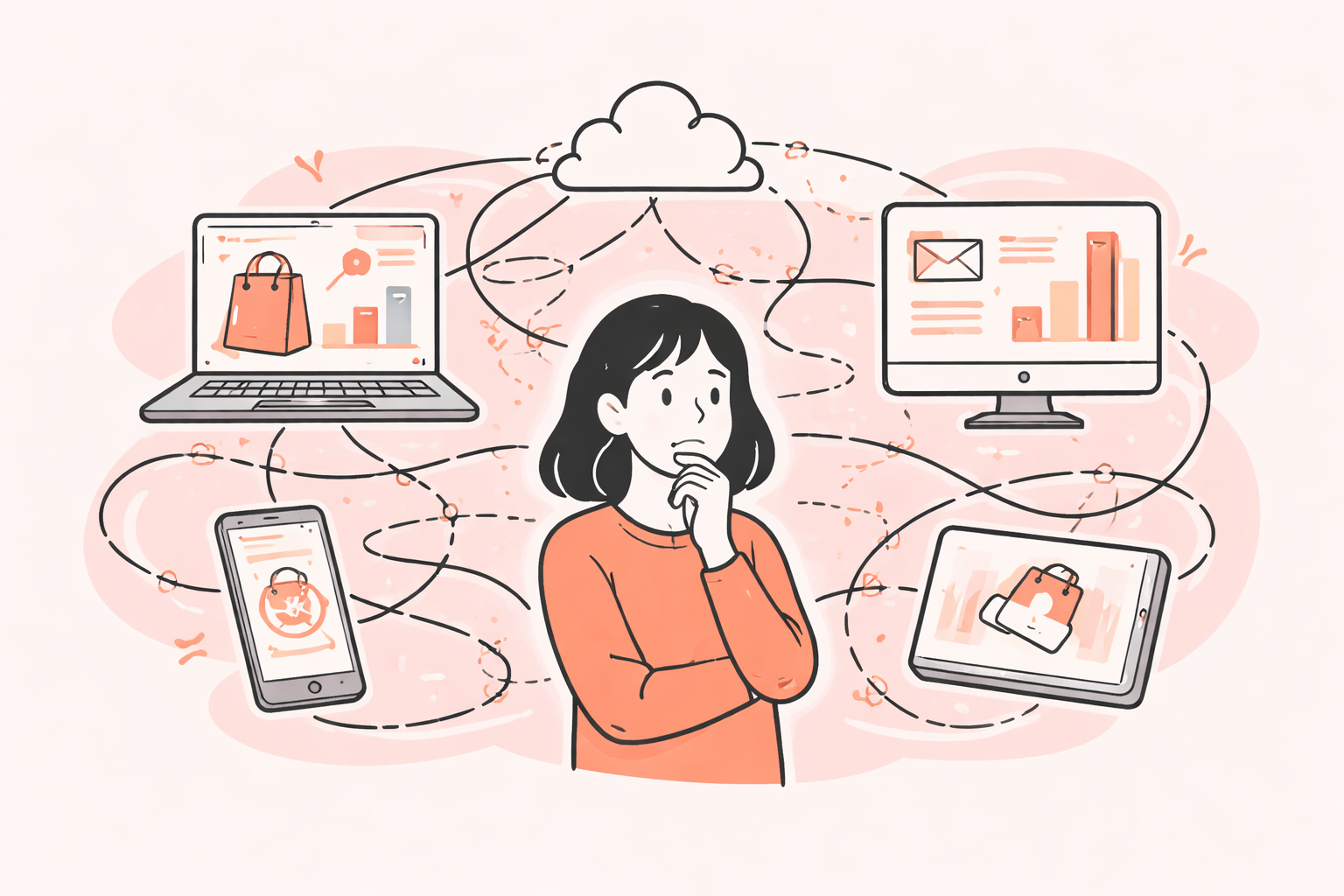
Many personalization initiatives fail before they begin because brands overestimate the quality or completeness of their data. Fragmented systems, outdated records, and missing context limit what AI can realistically deliver.
A typical scenario looks like this: ecommerce behavior lives in one system, email engagement in another, and retail media performance in a third. Each dataset tells a partial story, but none offers a complete view of the customer journey. When AI is layered on top of these disconnected systems, the result is often inconsistent personalization, where messages feel relevant in isolation but disjointed across channels.
Heavy reliance on retail-controlled data adds another layer of risk. Retailers own the customer relationship, and access can change overnight.
Over-Personalization
More personalization isn’t always better. Too many messages, too much specificity, or overly frequent targeting can overwhelm consumers and dilute core brand messaging.
Over-personalization often reveals itself when brands optimize every touchpoint independently. A customer may receive multiple messages in a short window, each technically “personalized,” but collectively overwhelming or repetitive. Without clear prioritization and frequency guardrails, relevance turns into fatigue and the brand risks training consumers to tune out entirely.
When personalization crosses the line from helpful to intrusive, trust erodes quickly.

Considering Tech Before Strategy
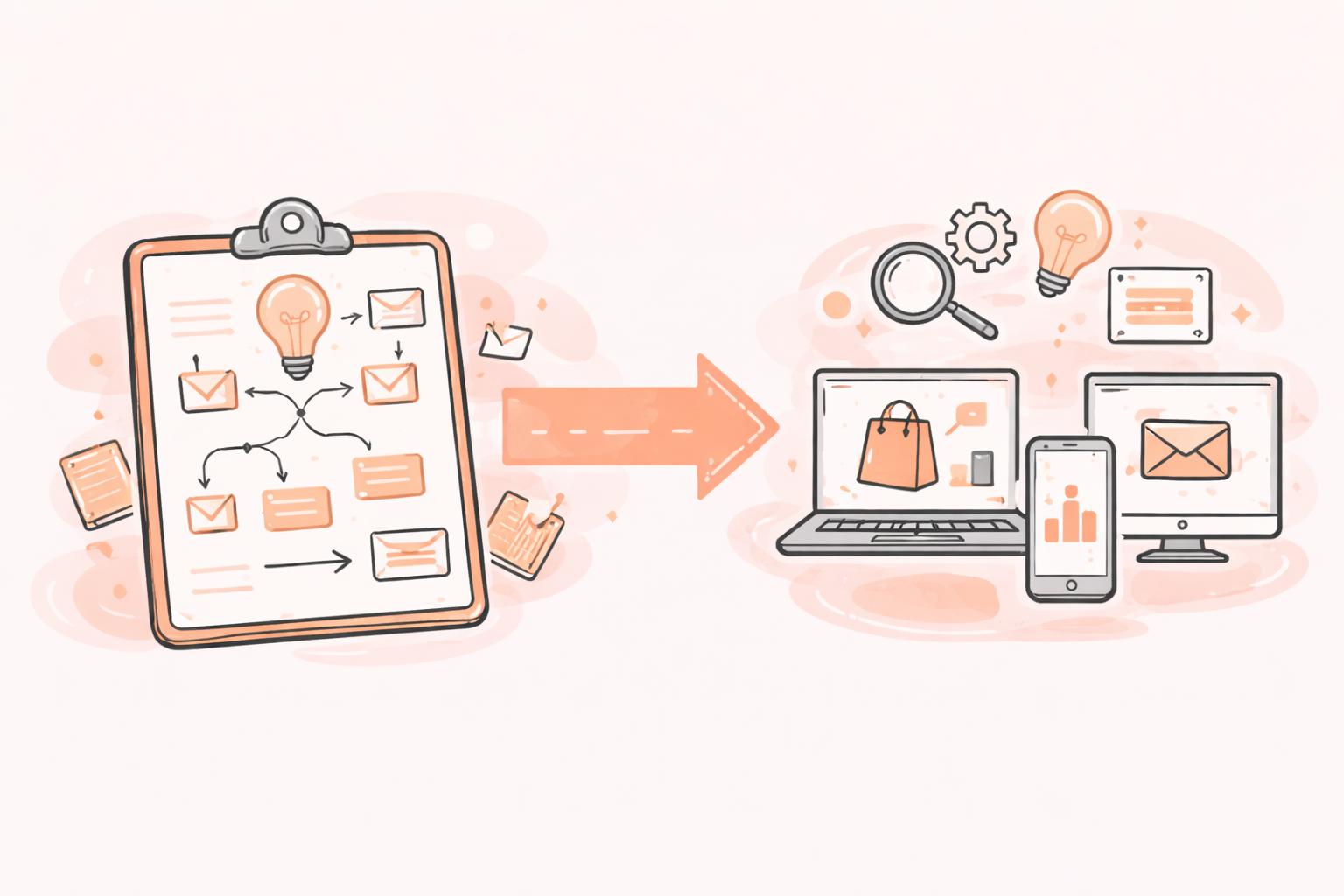
AI often enters the organization as a shiny new solution in search of a problem. Without clear use cases and leadership alignment, teams end up overwhelmed by platforms they can’t fully leverage.
This often shows up when teams invest in advanced personalization platforms without first agreeing on where personalization will actually create value. The technology may be capable of hundreds of use cases, but without strategic focus, it becomes underutilized or misapplied. Leadership clarity around objectives and guardrails is what turns AI from an expense into an asset.
Technology should follow strategy, not the other way around.
Measurement Challenges
Attribution remains one of the hardest problems in CPG marketing. AI personalization spans channels, but measurement models often don’t. Engagement metrics are easy to track, but true business impact is not.
For instance, a shopper may encounter a personalized brand message on social media, see a retail media ad days later, and ultimately purchase through a third-party retailer. Each channel claims partial credit, but none reflects the full influence of personalization across the journey. This complexity makes it critical for leaders to define success metrics that reflect business outcomes, not just channel-level engagement.
Leaders must be realistic about what success looks like and avoid mistaking activity for effectiveness.

What AI Can’t Replace
AI cannot replace:
Human judgment and brand intuition
Clear positioning and messaging strategy
Creative direction and storytelling
Cross-functional alignment between marketing, sales, and operations
The strongest personalization efforts sit on top of a solid brand foundation. Without that, AI just accelerates inconsistency.

A Practical Framework for Getting Started
Rather than boiling the ocean, leaders should focus on clarity and sequencing:
Start with the business goal
Identify the moment that matters most
Audit your data reality to understand what data you actually have access to
Pilot before you scale
Measure, learn, refine
This framework prioritizes discipline over speed, and reduces risk while building confidence.

What This Means Now and What’s Next
For mid- to large-sized CPG brands, scale makes prioritization both more powerful and more complex. Cross-team alignment between marketing, ecommerce, retail, and technology becomes vital.
Looking ahead, we’ll see:
Increased reliance on first-party data
Smarter retail media integrations
Creative systems that adapt without fragmenting brand identity.
Leadership focus should remain on guardrails, priorities, and long-term value, not on tools alone.
Ultimately, AI-driven personalization is not a tool decision. It’s a strategy decision. The brands that succeed will be those that adopt thoughtfully, balance opportunity with discipline, and remember that relevance only works when it’s rooted in trust.
Julee Ho Media is a boutique photography company specializing in CPG, food and beverage brands. Click here to get a quote and discover how we can help elevate your brand.
Continue learning:












Want more content like this? Subscribe to our monthly Food Marketing Newsletter!
More resources: